The better part of two decades ago, JJ Baskin asked me if I would like a cat. JJ had given the cat to his brother and sister-in-law the previous year, but she developed allergies and they could not keep him any longer. I agreed to take him, and Festus entered my life. A Russian Blue, Festus had a very regal air about him. He acted as if the whole world was his domain. He was not a lap cat by any means, but night after night he would always curl up at my side (after we got married, his preferred spot was by Anne’s legs). He loved to climb, and when I was in Austin I’d leave the door to the balcony open so that he could come and go as he pleased. When I moved into Buell Court I tried to replicate this be placing a 2×12 with rope wrapped around it between the balcony and the tree to serve as a cat bridge (it sometimes served as a raccoon bridge). In his youth he was an avid hunter, regularly bringing birds and squirrels to me.
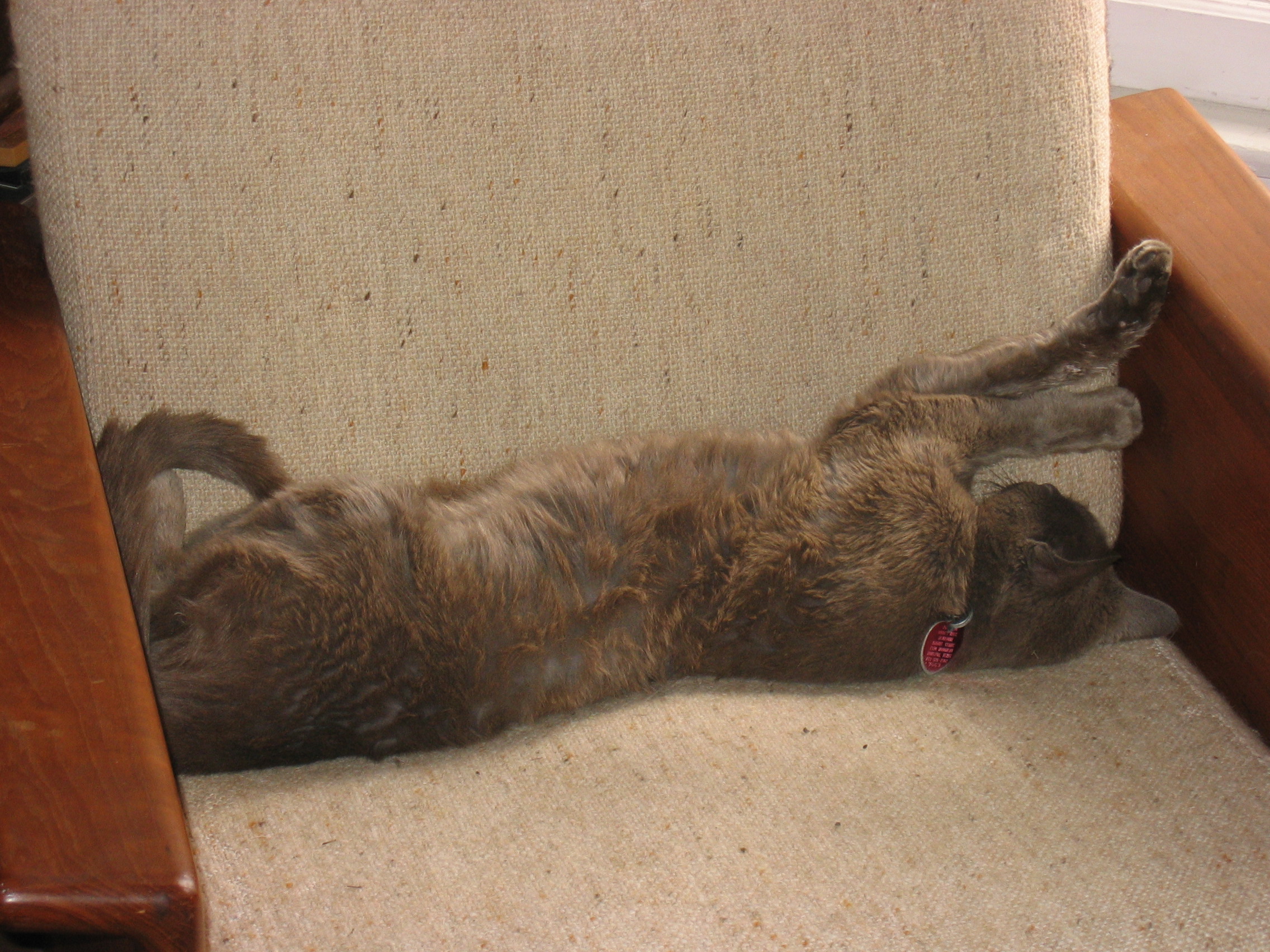
IMG_3268.JPG

Festus had been losing weight for several months before Anne & I started dating, and my vet didn’t really have any answers, so I took him to a new place: The Cat Doctor. Dr. Caroline Oeben determined that Festus was suffering from Lymphatic Plasmasitic Stomatitis, which caused inflammation in Festus’ gums and throat, making it difficult for him to eat. Through her dedication and care, Festus was given a new lease on life.

When Anne & I were married, I brought Festus to live with us…and Casey, Anne’s ten-year-old yellow lab. Casey was very curious about Festus, but Festus wanted nothing to do with her, and let Casey know that in no uncertain terms with lightning-fast bops on the Casey’s nose (but never with his claws extended). We had an uneasy truce for a while, but eventually they grew to at least tolerate the others presence (at least as long as Festus stayed away from Casey’s food bowl).

On New Year’s Eve 2008, Festus woke up from a nap and had lost most motor control of his head: he held it at an odd angle, and it would rotate counterclockwise. We spent the evening at the emergency clinic, and the next several days tests were done on him, but they never really determined what went wrong. His head returned to normal after about six weeks, but a lot of his former energy was gone.

IMG_0003.JPG

Over the past couple of months, his appetite shrank more and more, as did the time between his required injections. He spent most of the day asleep on the sofa or in the front yard, watching the kids play across the street or the birds that would come and eat his food. He got to meet Kate on Monday when we brought her home from the hospital, and that evening he ate more than he had in months. But he didn’t eat anything on Tuesday, nor on Wednesday. He was fighting a cold that had come and gone for a while, and Wednesday night he didn’t even have the energy to jump on the bed. Today we took him to Dr. Oeben for one last visit, and she helped us say goodbye by making him comfortable and relieving his pain. It was one of the hardest things I’ve had to do, but it was the right decision.
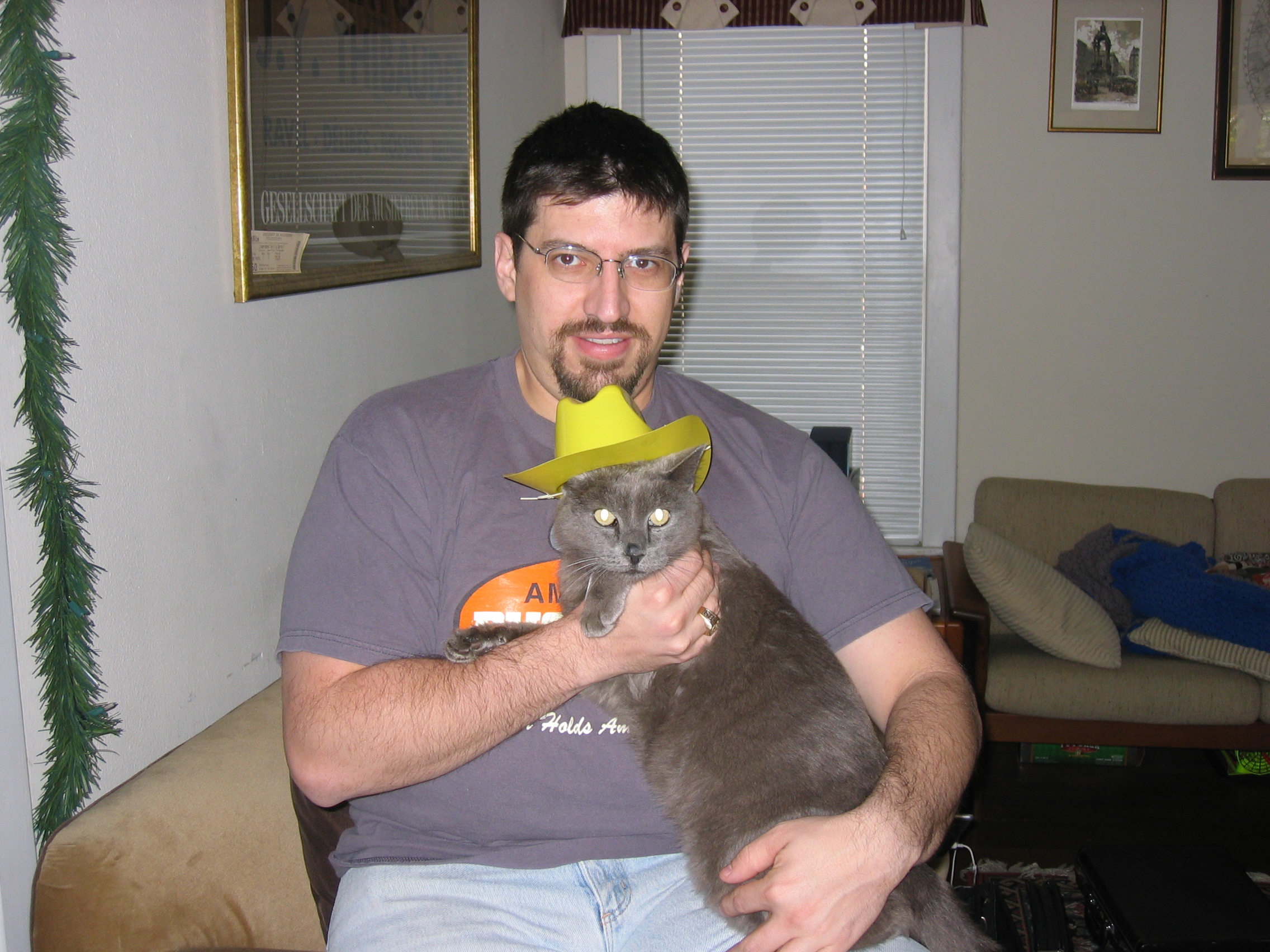
IMG_2922.JPG
Goodbye, buddy, my boon companion. Festus was the bestus.

Is Keynesian Stimulus Working?:
By Chris Edwards

In his Brookings Institution speech yesterday, President Obama called for more Keynesian-style spending stimulus for the economy, including increased investment on government projects and expanded subsidy payments to the unemployed and state governments. The package might cost $150 billion or more.

The president said that we’ve had to “spend our way out of this recession.” We’ve certainly had massive spending, but it doesn’t seemed to have helped the economy, as the 10 percent unemployment rate attests to.

It’s not just that the Obama “stimulus” package from February has apparently failed. The total Keynesian stimulus is not measured by the spending in that bill only, but by the total size of federal government deficits.

The chart shows that while the federal deficit (the total ”stimulus” amount) has skyrocketed over the last three years, the unemployment rate has more than doubled. (The unemployment rate is the fiscal year average. Two months are included for FY2010)

200912_blog_edwards17

The total Keynesian stimulus of recent years has included the Bush stimulus bill in early 2008, TARP, large increases in regular appropriations, soaring entitlement spending, the Obama stimulus package from February, rising unemployment benefits, and falling revenues, which are “automatic stabilizers” according to Keynesian theory.

The deficit-fueled Keynesian approach to recovery is not working. The time is long overdue for the Democrats in Congress and advisors in the White House to reconsider their Keynesian beliefs and to start entertaining some market-oriented policies to get the economy moving again.

Does CRA Undermine Bank Safety?:
By Mark A. Calabria

A recent policy forum here at Cato discussed the role of the Community Reinvestment Act (CRA) in the financial crisis. While the forum focused on the federal push for ever expanding homeownership to marginal borrowers, the analysis did not touch directly upon the question of whether CRA lending undermines bank safety.

Fortunately this is a question that one economist at the Federal Reserve Bank of Dallas bothered to ask. While his research findings were available before the crisis, they were clearly ignored.

In a peer-reviewed published article, appearing in the journal Economic Inquiry, economist Jeff Gunther concludes that there is “evidence to suggest that a greater focus on lending in low-income neighborhoods helps CRA ratings but comes at the expense of safety and soundness.” Specifically he finds an inverse relationship between CRA ratings and safety/soundness, as measured by CAMEL ratings.

In another study Gunther finds that increases in bank capital are associated with an increase substandard CRA ratings. Apparently bank CRA examiners prefer that capital to be lend out, rather than serve as a cushion in times of financial distress.

Given the current attempts in Washington to expand CRA, it seems some people never learn. One can always argue over how CRA should work, but the evidence is quite clear how it has worked, once again proving: there’s no free lunch.

Those who cannot remember the past are condemned to repeat it; but what about those who willfully ignore the past?